Editor: Eda Yiğit
Participation has become a way of producing and thinking that has deeply shaped the last five years of my life, which have unfolded at the intersection of art and academic research. During this time, it has transformed not only my artistic practice, but also the relationship I have built with social struggle and, perhaps in a bold sense, the way I come into engage with life itself. Participatory art is an effort to create a space in which living subjects, including the artist, are placed at the center. In this space, new balances are constantly formed between needs, struggles, and available resources, and new centers are continuously created. The artist is only one element among many on this scale. In an ideal world, the ultimate goal would be for there to be no clear difference in weight or position between the artist and the other elements. My own relationship with this field began with the euphoria I felt about the bonds participatory works establish with society. It was shaped by my everyday needs and resources, and it grew deeper as I began to discover the potential of producing together with communities.
Shaping an artist’s practice, forms of struggles, and ways of engaging with life cause a demanding, even sometimes intrusive relationship. At the same time, working in the field of arts and culture is itself largely a form of occupation based on consent. As the sparks that emerge from artistic production spread into life, life itself also seeps into the process of production. What emerges is a state of constant interweaving without interruption. With its structure that places living subjects at the center, participatory art has the capacity to produce this sense of occupation in the lives of all those involved.
On Power, Ethics, and Participation
Every work of art produced with social concerns inevitably turns its compass toward political contexts and the social sciences. In a similar way, when approaching participatory art, it is important to discuss what participation actually means. Participation is often assumed to be a just and inclusive practice. Yet, as has been widely discussed in critical debates on participatory art _most notably by Claire Bishop_ if questions about who is involved, under what conditions, to what extent, and in which decision making processes are not asked, it can end up reproducing existing power relations. Sherry Arnstein, one of the key figures in this field, defines participation as “the redistribution of power that enables the have-not citizens, presently excluded from the political and economic processes, to be deliberately included in the future.”[1] This definition highlights an understanding that encourages organizational structures to become more horizontal, open, and transparent. When participation is discussed in relation to the arts, Guy Debord is another name that is frequently mentioned. He emphasizes the potential of participation to rehumanize social relations that have been instrumentalized by capitalist production. For Debord, artistic practice should not be an object consumed by a passive viewer, but rather a search grounded in action, one that comes into contact with reality and attempts to repair social bonds. From this perspective, in an environment where the market has almost completely surrounded our visual vocabulary, art cannot take place solely through the production of objects. It must search for forms that open up spaces for action, however small, and that come into friction with reality. Participatory art, which often relies on collective production with a community and puts the process at the center rather than the final result, can take many different forms such as workshops, interventions in public space, performances, and happenings[2]. It aims to build relationships, nets of solidarity, and practices of empowerment.[3]
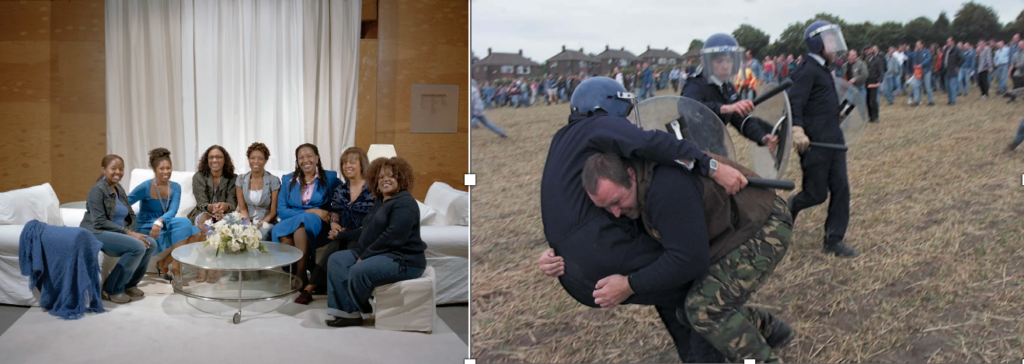
Tatlin’s Whisper #6[4] by the Cuban artist and activist Tania Bruguera, offering audience one minute on stage to express their thoughts about the Cuban government without censorship; Shelter for Women Suffering from Drug Addiction[5] by the Austrian artist collective WochenKlausur, creating a space in Zurich where sex workers struggling with addiction could rest and use substances in a safer environment; Stories of Work and Survival[6] by Suzanne Lacy, bringing the experiences of women from different classes, races, and professions in both private and public spheres into a museum context through collective representation; and The Battle of Orgreave[7] by Jeremy Deller, restaging the 1984 miners’ strike years later together with the relatives of workers and reenactment specialists, can all be considered powerful examples in the field of participatory art. By daring to ask questions about decision making processes, authorship, and tangible outcomes, these works propose a continuous state of acrobatics within the delicate balance between art and activism, accessibility and intellectual labor. At the same time, these productions also have their shortcomings and problematic aspects. Bruguera’s work, for instance, has been criticized as the consequences of courage were not distributed equally and risk was aestheticized. Some of Suzanne Lacy’s projects have also been debated in terms of authorship and questions of identity. In addition, in almost all of these examples, the tension between creating a step in an artist’s career and producing structural solutions, in other words, the question of the work’s primary purpose, remains an open question. The critiques directed at these works have also enriched discussions around ethics, representation, and participation that have developed in the art world over the years. Yet, due to the nature of this field, it is not possible to produce a single, universal formula for addressing these questions. The meaning and limits of participation are constantly being redefined according to the geography, the cultural context, and the dynamics of the relationships in which the work is produced.
For this reason, my aim in this text is not to define participatory art from beginning to end, to draw a historical framework, or to cover all of its manifestations in the field of contemporary art. Rather, I want to try to engage in a dialogue with the questions I have been searching to answer throughout my own process of learning. In doing so, I will touch on my personal experiences with the concepts of center and periphery, fluidity, and the ethics of participation, all of which have occupied my mind intensely in recent years. In this process, I will also direct some of the criticism mentioned above toward my own decisions and blind spots.
Tea Sugar Dream: An Encounter from Within the Process
“Although I can't pinpoint the exact time, at some point in the past year, while I was walking the streets of Berlin, where I had come alone with the dream of a new life… I lost my joy. While I was being scattered in every direction in all aspects of life; while I was financially on my own; while I was rushing to make it to the supermarket before closing time; while all the meetings were held in German and seemed endless; while I was striving to prove myself from scratch; while I was spending too much time alone with myself; while I was doing laundry, dishes, dealing with Foreigners’ Office; while I was fighting against the signs of aging; going to school, and attempting to keep up with the academic information overload; while I was expected to discuss art and political theory; while I was struggling to remember who once said, ‘Some people live their lives, while we fight with ours’... I lost my joy. My sorrow at losing my joy knows no bounds.” (April 2022)
The preface to my master’s thesis on migration and collective joy, which I completed at the beginning of 2024, opened with these notes that I had written in my diary a year earlier. It was a period in which I felt quite constrained, isolated, and, although I could not fully describe how, somehow worn thin. At that point, I decided to turn back and look at my own predecessors. Migration from Turkey to Germany is a phenomenon that has long been shaped by different reasons and identities, has grown increasingly diverse, and does not seem likely to come to an end anytime soon. Within this historical flow, I wanted to look at those who had migrated here before me, especially the women we refer to as the first generation of migrants. Most of these women arrived in Germany between the 1960s and the 1980s as “guest workers” or as relatives of guest workers, in the terms used at the time. They worked in low paid jobs or provided unpaid care labor, often without knowing German. How had these women found joy in the country they arrived in? And could their practices of finding joy teach me, as a new migrant, something about how to rediscover my own?
My master’s thesis project, Tea Sugar Dream[10], a participatory art project centered on collective joy together with elder women, emerged from these questions and was carried out in collaboration with the Türkischer Frauenverein Berlin[11] (Berlin Turkey Women’s Association).[12] My aim was to understand the women’s ways and practices of finding joy and, through dialogue with them, to curate intergenerational workshops where we could experience joy together. During the nine months we spent side by side, I tried to grasp both their methods of finding joy and how factors such as age, migration experience, and cultural codes were reflected in their everyday lives, and in this way to develop accessible approaches. Over time, four themes stood out in our conversations about joy: visual arts, music, shared meals, and dance. In the later stages of the project, the workshops led by invited artists also took shape around these themes.[13]
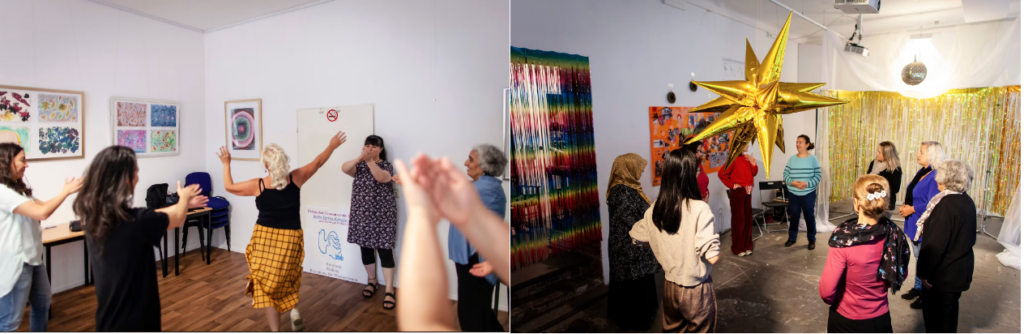
Participatory art is a process oriented and fluid practice, and in this project as well, the methods took shape and transformed along the way according to emerging needs. Prejudices and expectations between generations who had migrated from Turkey to Germany at different times occasionally came to the surface.[14] It took time to be accepted by one another and to stop holding ourselves back, yet over the course of the nine month project we slowly built a relationship of trust. As this foundation of trust began to form, another issue became visible: the historical questions within art itself. The question of what can be defined as art is already an age old one without a clear answer. In a form of production that is not object centered, that takes shape through process, and that brings together people from different generations whose expectations of art vary greatly, this question became even more complex. This uncertainty also showed itself in the matter of making the process tangible and documenting it.
Trying to convey participatory practices through photographs or short texts can cause the work to lose its context and depth. Images of people sitting around a table, eating or talking, often fail to depict the relational intensity, the vulnerability, and the transformations that lie behind these gatherings. In this first collaboration with the Berlin Turkey Women’s Association, there was no physically permanent outcome apart from a single workshop[15] in which we brought together our unique creativities and turned them into a large collage. This situation once again reminds us that the value of participatory art often lies not in the objects it leaves behind, but in these invisible spaces, in the relationships it transforms, and in the connections built throughout the process.
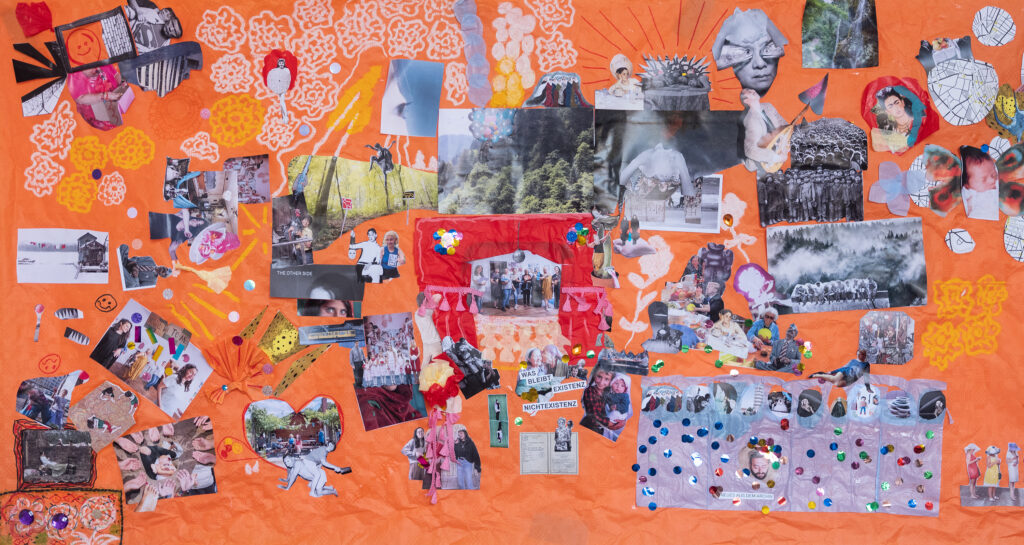
As the Tea Sugar Dream process was approaching its final stages, words by one of the participants stucked with me: “Sweet girls like you come here, do art projects with us, and then leave. We are the ones who remain here.” This was not merely a personal reproach directed at me. It revealed the Achilles’ heel of participatory art, which I mentioned earlier: the tension between these kinds of projects becoming steps in an artist’s career and the real need to create lasting, structural change. When my thesis period came to an end, I had an idea of where and with whom I might rediscover my joy, along with a good diploma. Yet putting Tea Sugar Dream aside as a completed project also carried the possibility of leaving behind a sense of withdrawal after the temporary intensity such projects create, and of producing a new feeling of emptiness.
Although they are not common, there are examples where art does more than produce representation and instead creates social change. One such example is the initiative S27 (Schlesische27)[16], which since the 1980s has sustained a long term practice connecting art with education and everyday life. One of the projects they developed along this historical path, CUCULA[17], emerged as a response to an urgent need that arose during the wave of migration to Germany in 2014 and 2015.
The project began when displaced people who had set up camp at Oranienplatz approached S27 with requests for a safe shelter. Although S27 wanted to provide rooms in their buildings to young people, the lack of furniture in those rooms led the project in an entirely different direction. Instead of solving this shortage through ready made solutions, they chose to produce together with the young people and to turn this production into a political demand. CUCULA was structured as an initiative in which participants became partners, producing furniture through a Do-It-Yourself model. While the furniture production gained visibility through fairs and sales, the central concern of the project became opening up public discussion around refugees’ right to work. The images circulated through media and public advertisements represented people with refugee status not as passive recipients of aid, but as working and producing subjects. After years of awareness raising and advocacy campaigns, the legal regulation regarding refugees’ right to work in Germany was changed in 2016. With more than fifty members from different professions, S27 played a significant role in these campaigns.
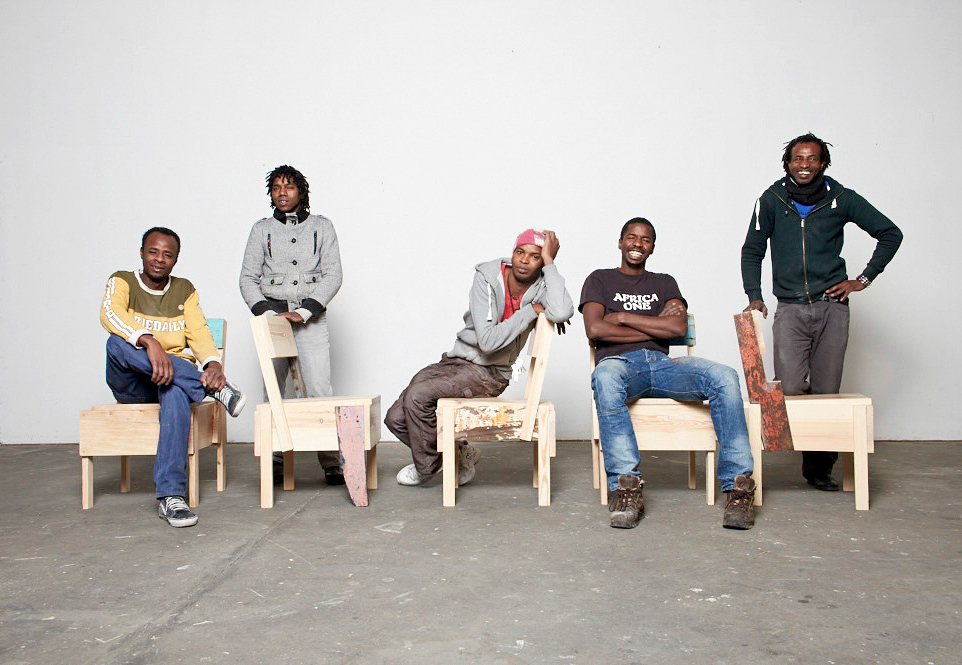
This project can be considered not only within the category of art alone, but also under the heading of activist art. Rather than producing art objects, CUCULA reframed the issue of refugees’ right to work, a topic often treated as invisible within the existing social order, by using aesthetic strategies. What is also decisive here is the shift of participants from being consumers to becoming actors, and the making visible of everyday situations that are considered “normal” as a political gesture. The question, then, is not so much whether this is art or social intervention, but rather how meaningful that distinction is in the first place.
Tania Bruguera, one of the important contemporary representatives of activist art, draws attention to the balance between aesthetic or intellectual concerns and political aims. She explains that when producing political art, she does not want to create works that speak only to other artists. Instead, she prefers to make art by consciously using the tools of power and politics, such as schools, newspapers, and forms of public address.[19] Yet Bruguera’s main emphasis is on ensuring that the issue itself does not become simplified through this process of instrumentalization and that the work does not lose its intellectual depth. Maintaining this balance requires constant negotiation.
Reading the approaches of S27 and Bruguera together makes it possible to draw a few conclusions about participatory and activist art practices. First, activist art is not a one way relationship. The aim is not only to produce political work through the tools of art, but also to produce art by using the tools of politics. In this context, art and politics need to be understood not as fixed positions where one provides the content and the other the form, but as a net of relationships in which positions are constantly shifting. Second, the tools themselves need to change according to the community being addressed and the message that is meant to be conveyed. This approach forms the basis for a shift from the idea of “art for society” toward an understanding of “art with society.” Finally, and perhaps most difficult of all, there is the challenge of establishing an intellectual and ethical balance between the artist’s aesthetic concerns, the needs and aims of the community, and political goals.
The Longer Term Forms of Participation: The Orta Okul Experience
The questions that had taken shape at the intersection of art education, social justice, and participatory art continued to occupy my mind in the period after I completed my master’s degree. During this time, I began my doctoral research, which developed around questions of who has access to education and who or what is positioned at education’s center. In parallel, together with artist and researcher Ece Gökalp[20], we founded Orta Okul (“Middle School” in English)[21], an organization focused on educational justice that aims to produce longer term and more structural responses to these questions. Orta Okul takes its name from the idea of meeting in “the middle.” It seeks to build a structure that is neither overly complex nor overly simple, neither demanding nor reductive, and in which facilitators and participants learn from one another throughout the process. This approach carries traces of the theoretical and practical inquiries I mentioned earlier.
At the beginning, partly to ease the pressure on ourselves, we said that we would “learn by doing.” Over time, we learned a great deal not only from the processes themselves, but also from each other and from the other facilitators we worked with. Together, we experienced what participation means, how the ideas we encountered in theory can be built in practice, and where they are tested and challenged. In this direction, one of the first groups that Orta Okul, as an organization, and we, as two artists, connected with was once again the Berlin Turkey Women Association.
The women who have been organizing under the Berlin Turkey Women Association since 1975 began their work with the slogan “for ourselves, by ourselves.” As migrant and working class women, they recognized the layered nature of their struggle long before the term “intersectionality” found its place in academic literature. The year 2025 marked the fiftieth anniversary of the association’s founding, and the association invited us to produce an exhibition based on their own archives for March 8, their founding date.
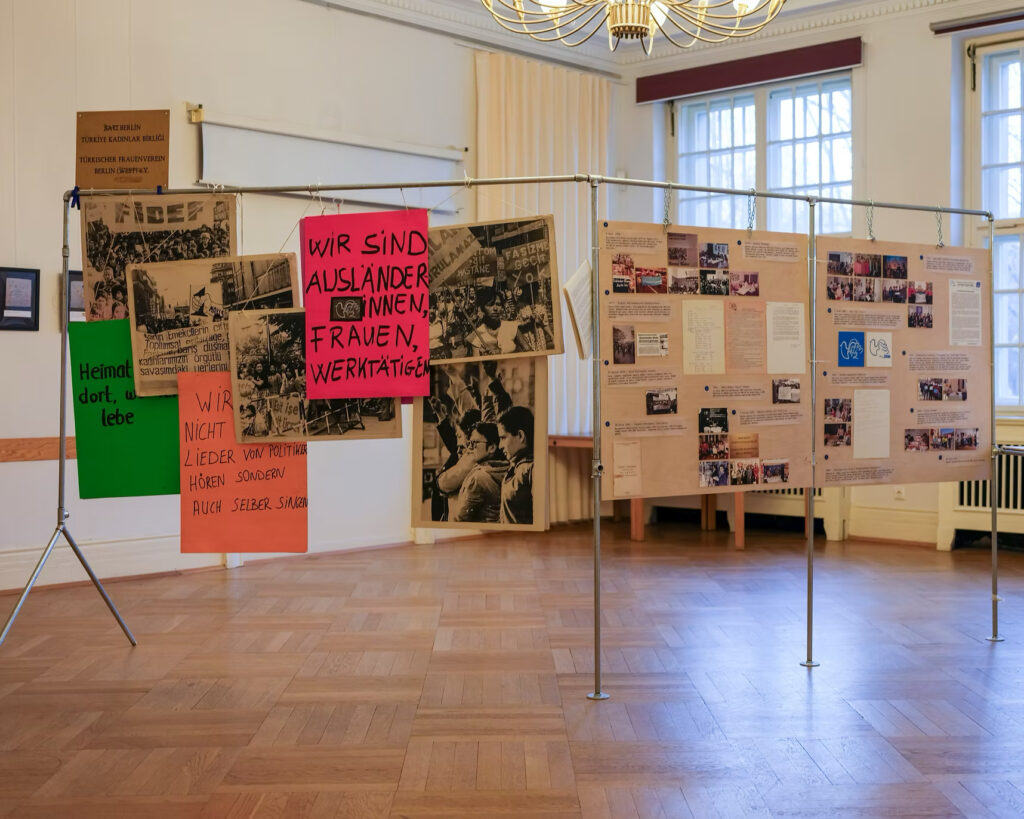
After Ece and I spent several weeks regularly going back and forth to the association’s archive, we realized that although it was a powerful resource, it also contained certain gaps. For this reason, we began a participatory project that unfolded throughout 2025, with the aim of documenting the experiences of women who were not represented in the archive, especially those who had built stronger connections with the association in more recent years. In Orta Okul, and in our own participatory art practices, the place that art occupies for us is about building connections between people and groups whose paths might not otherwise cross, creating structures that grow stronger through mutual support, and being able to exist within these structures both as producers and as users. For this reason, one of the most essential components of the work we carry out together, especially in our collaboration with Ece, is time. In this project as well, we devoted serious time not only to production but to being together. Some weeks, we did nothing at all and just spent time at the association.
Alongside the archive research, we conducted video interviews with the founders of the association and with women who had taken on administrative roles in different periods.[23] We also carried out oral history work with women who regularly spent time at the association, creating material that would later inform artistic productions in different forms.[24] In parallel with this process, we organized participatory art workshops that helped keep our connections alive.[25] Because of the scope of this text, I cannot go into the full details of all efforts here, but I would like to briefly mention two initiatives for which Ece and I took on the main responsibility for developing the concept and production, one that unfolded successfully and another that did not progress as we had imagined.
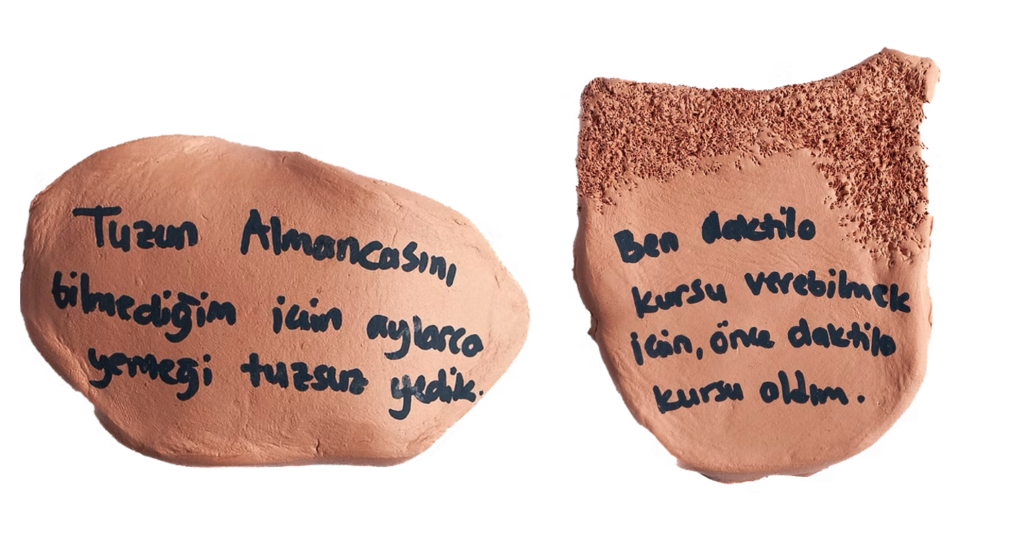
One of the works we produced together, A Minor Detail[26], was inspired by a single sentence spoken by Beser Abla, who regularly came to the association, on one of the days we were there simply to chat. She told us that when they first migrated to Germany, they ate their meals without salt for weeks because they did not know how to say the word “salt” in German. This story led us to ask the following question: within large migration narratives that are often homogenizing, how can such small, personal, and easily forgotten details find a place for themselves without being forgotten? With this question in mind, we invited the women to a series of gatherings where we would collect stories together and produce small clay stones on which these stories would be placed. The idea resonated with many women. Weeks later, even during conversations on entirely different topics, we would hear someone say, “note this sentence down for the project.” Of course, it is not possible to expect a work produced by such a diverse group to generate the same level of excitement in everyone. Still, within the overall dynamic of the group, it was possible to sense a circulating curiosity, a spark, and a shared sense of embracing.
In contrast, the project that did not unfold as we had expected was 50 Years 10 Meters, which we had imagined together with the women at the association. In this work, we planned to place our collective stories onto a ten meter canvas using different techniques such as printing, embroidery, and painting. During the first two sessions of the project, which we began after spending a considerable amount of time together, there was a similar sense of excitement. This time, however, what we had overlooked was that we did not have the time or capacity to sustain such a comprehensive and demanding goal with a group that was generally used to waiting for the initiative to come from us. By the end of the third session, while we were still trying to understand the basic techniques of printing and painting, the question emerged: are we putting too much pressure on both ourselves and the group? In the end, as two artists, we had joined the regular gatherings of a group that essentially came together to socialize, and we had partly “occupied” their space, even if with the intention of producing something together. During a group feedback and evaluation conversation, some of the women wanted to continue with the project, while others preferred to take a break for a while. In line with this feedback, we decided to continue the project at a later time.
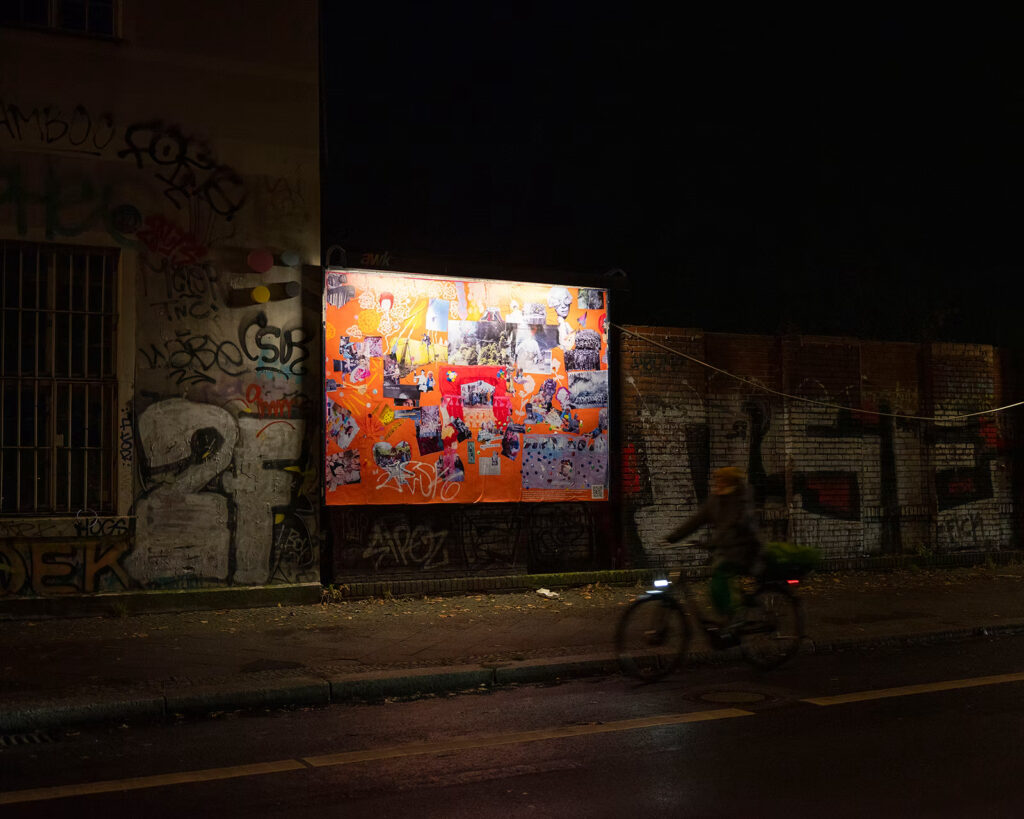
In the early days of Orta Okul, I had the opportunity to exhibit the collage we created together with the women as part of Tea Sugar Dream on a billboard in Kreuzberg. For me, the symbolic meaning of carrying our stories and collective production into public space was significant. At a time that racism and anti-migrant policies were on the rise again, it was crucial to say that we were here, with all our joy and colors. Yet during the time the work remained there, none of the participating women went to see the billboard. This experience became a lesson in thinking about how to move our productions and exhibitions into spaces where the women felt a stronger sense of belonging, and at the beginning of the fiftieth anniversary project we curated an exhibition inside the association’s own premises. On the opening day, we were chatting in front of the association when a woman peeked inside, turned to her friend, and said, “the exhibition must be somewhere else.” It was a tragically comic moment. The question of who defines what as art surfaced once again. For her, art most likely meant paintings and sculptures hanging on walls. For us, as mentioned earlier, it included photographs of people gathered around a table, empowering documents, archival newspapers, and the relational intensity created by all of these elements.
Experiences like these offer clear examples of the gaps within participatory art. The difference between participating in an artwork and becoming a part of the decision making process raises difficult questions about power relations between participants and initiators/facilitators, and often leads to moments of stumbling. Yet the main thing is how these stumbles are handled. Whether you are able to build a support mechanism along the way, or whether you can show the flexibility to take a different path when necessary. For us, all of our mistakes, along with the moments of exhaustion they brought, held critical lessons for our future work. Over time, by receiving feedback both from each other and from participants, we learned how to establish a more balanced relationship. There were many moments when our artistic egos, our familiar ways of producing, and at times even our dreams were shaken. Yet practices of negotiation carry hopeful potentials as much as they carry risks. As is also emphasized in the futurist theater, which can be considered one of the early currents of participatory art, the only situation that can truly be called a failure is when the audience, or in this context the participant, remains “neutral.”[28]
Kaynaklar
1 Arnstein, S. R. (1969). A Ladder of Citizen Participation. Journal of the American Institute of Planners, 35(4), 216 to 224.
2 Bishop, C. (2023). Artificial Hells: Participatory Art and the Politics of Spectatorship. Verso Books.
3 The concept of “Happening,” refers to Allan Kaprow’s idea of immersive, site specific art events. A Happening aims to transform spaces of everyday life into fields of interaction that focus on relationships, values, and the practical impact of art.
4 For detailed information, see: https://taniabruguera.com/tatlins-whisper-6-havana-version/
5 For detailed information, see: https://arte-util.org/projects/shelter-for-drug-addicted-women/
6 For detailed information, see: https://www.suzannelacy.com/stories-of-work-and-survival
7 For detailed information, see: https://www.theguardian.com/artanddesign/2023/apr/23/jeremy-deller-art-is-magic-extract-orgreave-stonehenge-murdochs
8 For detailed information, see: https://www.suzannelacy.com/stories-of-work-and-survival. Accessed February 7, 2026.
9 For detailed information, see: https://publicdelivery.org/jeremy-deller-the-battle-of-orgreave/. Accessed February 7, 2026.
10 “Tea Sugar Dream” or “Tea Sugar (a) Dream” is a play on words inspired by its phonetic resemblance to the Turkish phrase “teşekkür ederim,” which means “thank you.” When these three English words are pronounced consecutively, they produce a sound similar to the Turkish expression of gratitude.
11 The Berlin Turkey Women Association was founded in 1975 as the first migrant women’s association in Berlin, established by women who had migrated from Turkey. tuerkischerfrauenverein-berlin.de
12 Due to the limited availability of public social spaces for older women, the association organizes weekly Friday morning gatherings where women come together. During my thesis process, I began attending these meetings, and most of the activities took place on these days.
13 The artists and cultural workers I invited within the scope of Tea Sugar Dream, in chronological order: Yasemin Köker, Gizem Aksu, Hilal Bozkurt, and Nursena Topcuoğlu.
14 In addition to the prejudices shaped by our identities, this process coincided with the period leading up to Turkey’s 2024 General Elections, when political polarization was particularly intense.
15 The workshop mentioned was led by Hilal Bozkurt. The producers of the collective collage were: Hilal Bozkurt, Emine Can, Julianne Chua, İpek Çınar, Gülşen Dur, Aysel Özçoban, Nevim Şen, and Nursena Topcuoğlu.
16 Schlesische27 emerged in 1978 in Berlin as a project born out of an urban redevelopment competition and was initially designed as a German Turkish youth and cultural center promoting intercultural learning and practical education. After moving to its space at Schlesische Strasse 27 in the early 1980s, it became an educational and cultural center for young people supported through public and private partnerships. Over time, it developed into an international institution carrying out artistic projects, youth exchange programs, and community based cultural education initiatives.
17 For detailed information, see: https://www.cucula.org
18 For detailed information, see: https://www.s27.de/portfolio/cucula/?lang=en. Accessed February 7, 2026.
19 Bruguera, T., Sanromán, L., Kantor, S., Phelan, P., Kester, G. H., Lacy, S., Reed, I. M., and Falconi, J. L. (2018). Tania Bruguera: Talking to Power = Hablándole al Poder. Yerba Buena Center for the Arts.
20 For detailed information on Ece Gökalp’s work: ecegokalp.com
21 Orta Okul is a multilingual, culturally responsive, and nomadic educational platform that aims to place the living subject at the center of education and to shape each educational program together with participants, in line with their needs, experiences, and available resources, within a framework of shared principles. For detailed information, see: ortaokul.info
22 For detailed information, see: https://www.ortaokul.info/tuerkischerfrauenverein. Accessed February 7, 2026.
23 The artists and cultural workers who facilitated these workshops, in alphabetical order: Gizem Aksu, Bilge Emine Arslan, İpek Çınar, Ece Gökalp, Güney Tekin, and Mayıs Toker (nanayfanzin).
24 A Minor Detail takes its title from the book of the same name by Adania Shibli. For more detailed information about this work, see: https://www.ortaokul.info/aminordetail
25 For detailed information, see: https://www.ortaokul.info/aminordetail. Accessed February 7, 2026.
26 Marinetti, Filippo Tommaso, Emilio Settimelli, and Bruno Corra. "The futurist synthetic theatre." Futurism: An Anthology (1915): 204-9.