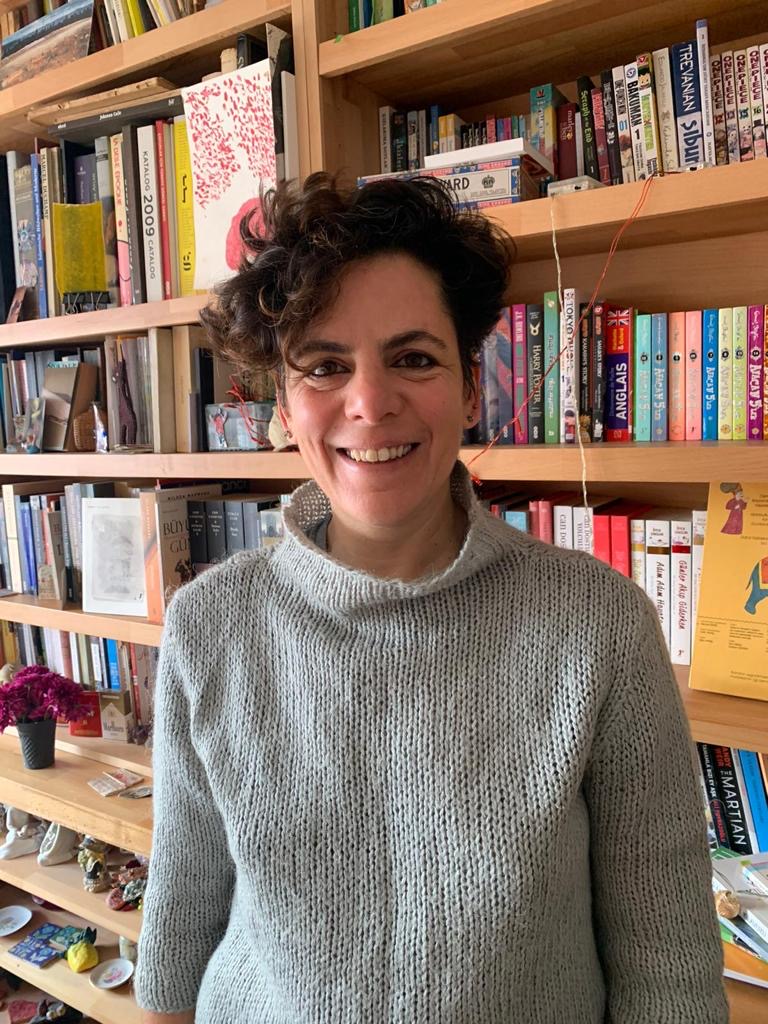
After earning her BA in Painting from Mimar Sinan Fine Arts University in 2015, Gizem Ünlü pursued her MFA studies in Plastic Arts at Yeditepe University and the Stuttgart State Academy of Art and Design. Since 2024, she has been teaching as a visiting academic at Istanbul Technical University.
Her practice focuses on themes such as belonging, loss, mourning, vulnerability, and the thresholds between domestication and violence. She is particularly interested in the emotional, cultural, and historical resonances of everyday materials and how they can activate the collective unconscious.Her works often unfold through installations, sculptures, video, and spatial compositions; combining material, language and performative gestures in ways that explore emotional and discursive resonances. Her process reflects both care and pain; gestures that speak to both vulnerability and endurance.
Inside The Trap
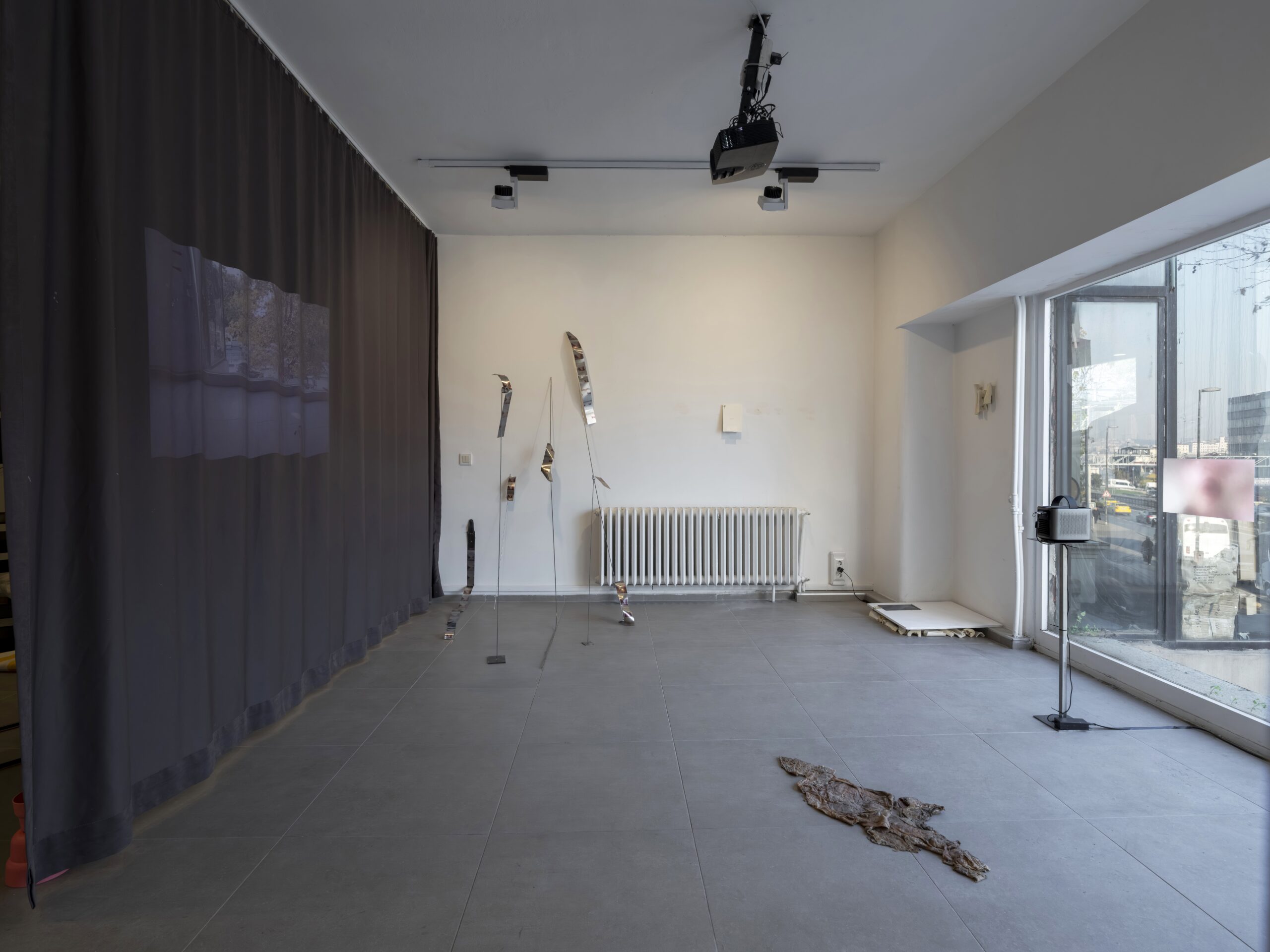
During my time working at İMÇ within the SAHA Studio program, the area’s visual and material culture, together with the sociopolitical context in which display, and suppression are tightly entangled, became my point of departure. The works that emerged throughout this process bear traces of a psychological and bodily state of compression produced by the hardened visual political landscape of the public sphere.
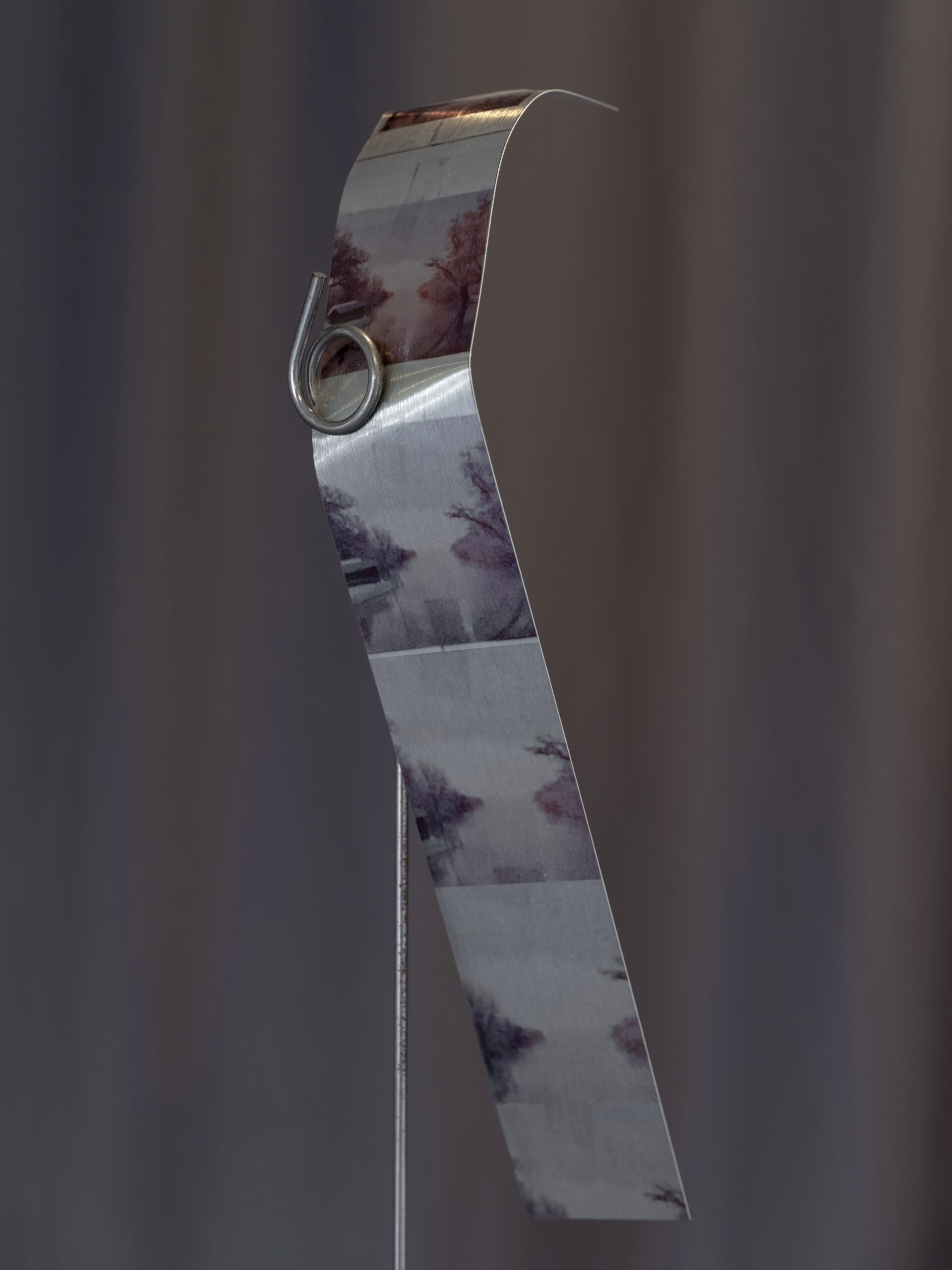
Looking at this landscape, being unable to look at it, or choosing not to look, along with the bodily exhaustion caused by an inability to intervene and the desire to escape by turning one’s gaze inward toward a more generic and idealized scene, shaped the orientations and recurring gestures within my production. Actions such as cutting, covering, scraping or erasing, and cracking, which recur in the space as bodily and sensory repetitions, appear to me as absurd and futile attempts to enact this desire for escape. Rather than constructing a grand statement or a linear narrative, I find myself drawn toward a quieter, fragmented language within today’s loud visual political atmosphere.
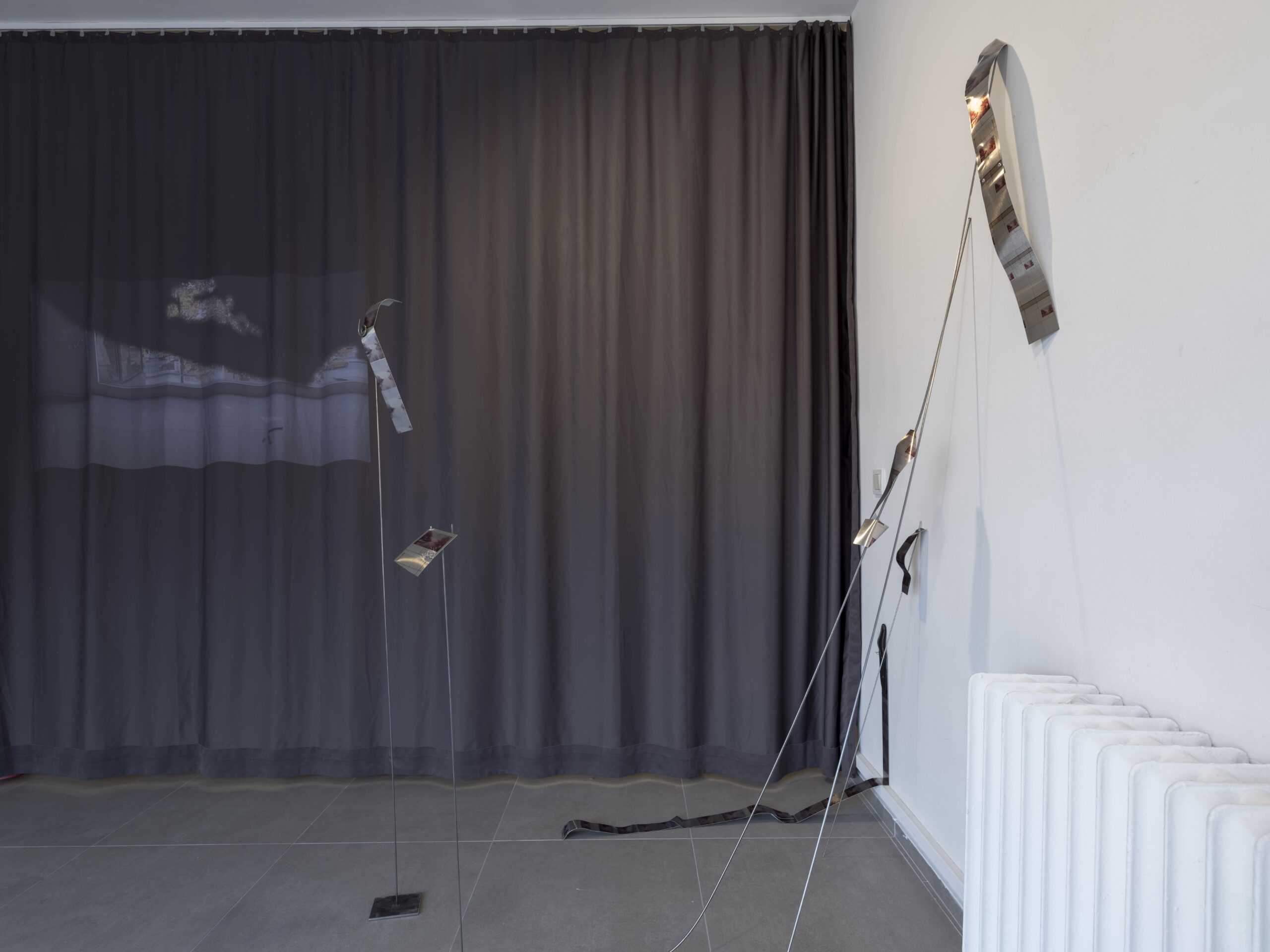
I approached the street facing facade or shop window of the space as an interior surface, a surface of contact. In the inner section of the studio, where the curtain is located, the gaze is redirected outward once again. The landscape image that repeats and is continuously interrupted on the curtain temporarily transforms the surface onto which it is projected into a display window. Inside and outside, what is seen and what cannot be seen, surfaces that encounter the body and those that remain at a distance, continuously exchange places.
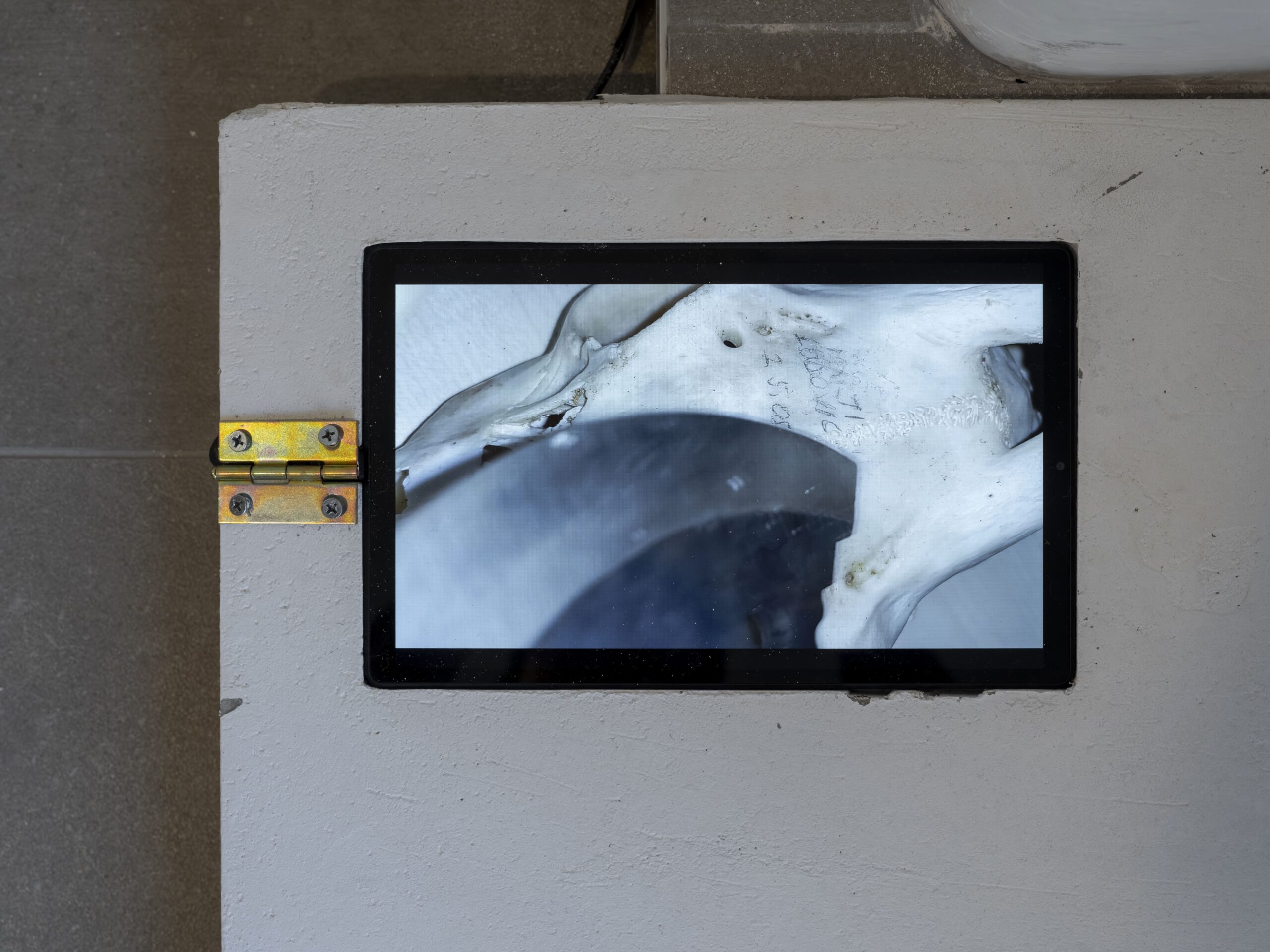
The hunter’s knife bearing a rabbit figure, which recurs throughout the space in different forms, is positioned not as a tool with a fixed function but as an object with a displaced direction. It attempts to interrupt flow, to momentarily block the gaze, to erase the writing on a found skull, and to open a physical crack in the surfaces of the space.
Throughout this process, I developed an absurd text and video scenario centered around two found objects. This fiction, presented in the space in an unfinished state, points to a condition in which speech and language fail to become possible. Within the scenario, the objects appear as characters, yet these characters are unable to detach themselves from the contexts in which they are embedded.