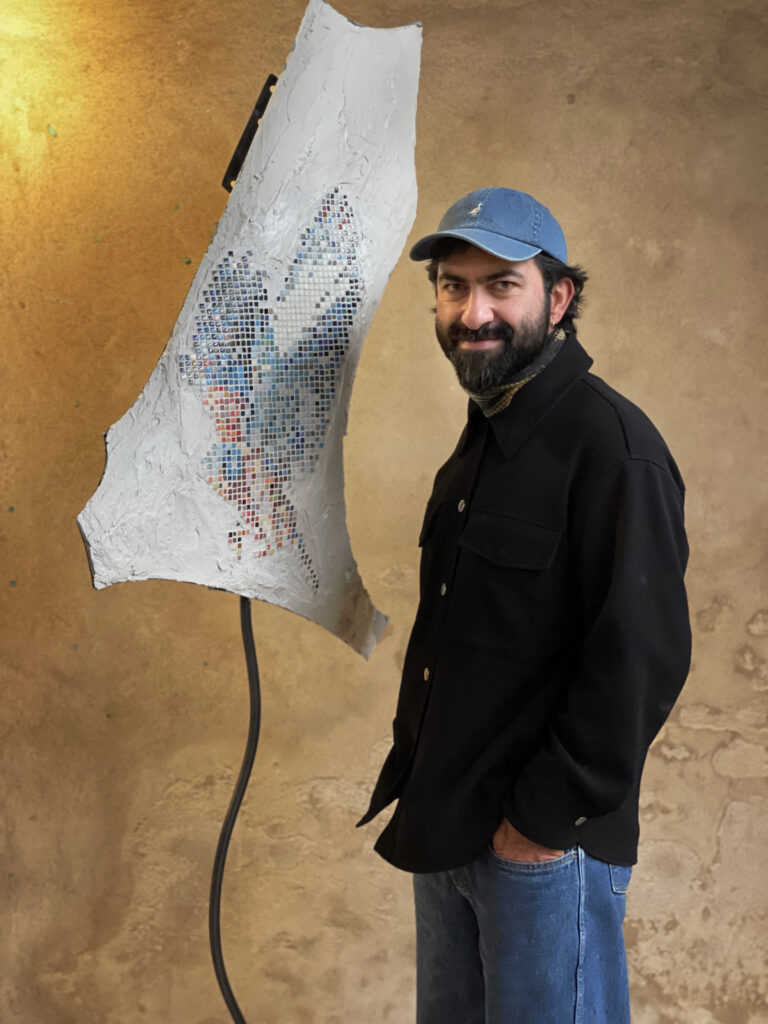
Suat Öğüt is an artist and filmmaker based in Amsterdam, whose interdisciplinary practice explores how recent history shapes the present through personal and collective narrative-building. By engaging with monuments, archives, and everyday structures, Öğüt challenges dominant ideologies and reframes heritage as a living, culturally embedded practice. His work also explores non-linear perceptions of time, emphasising the urgency of the present.
SÖğüt studied at Marmara University and completed a postgraduate program at HISK in Ghent. He was nominated for the Young Art Support Amsterdam Awards (2020) and received the Akbank Contemporary Artist Prize (2013). From 2015 to 2022, he co-founded Corridor Project Space, an independent art initiative based in Amsterdam.
Echoes of Silent Hums
Variable dimensions, 2025
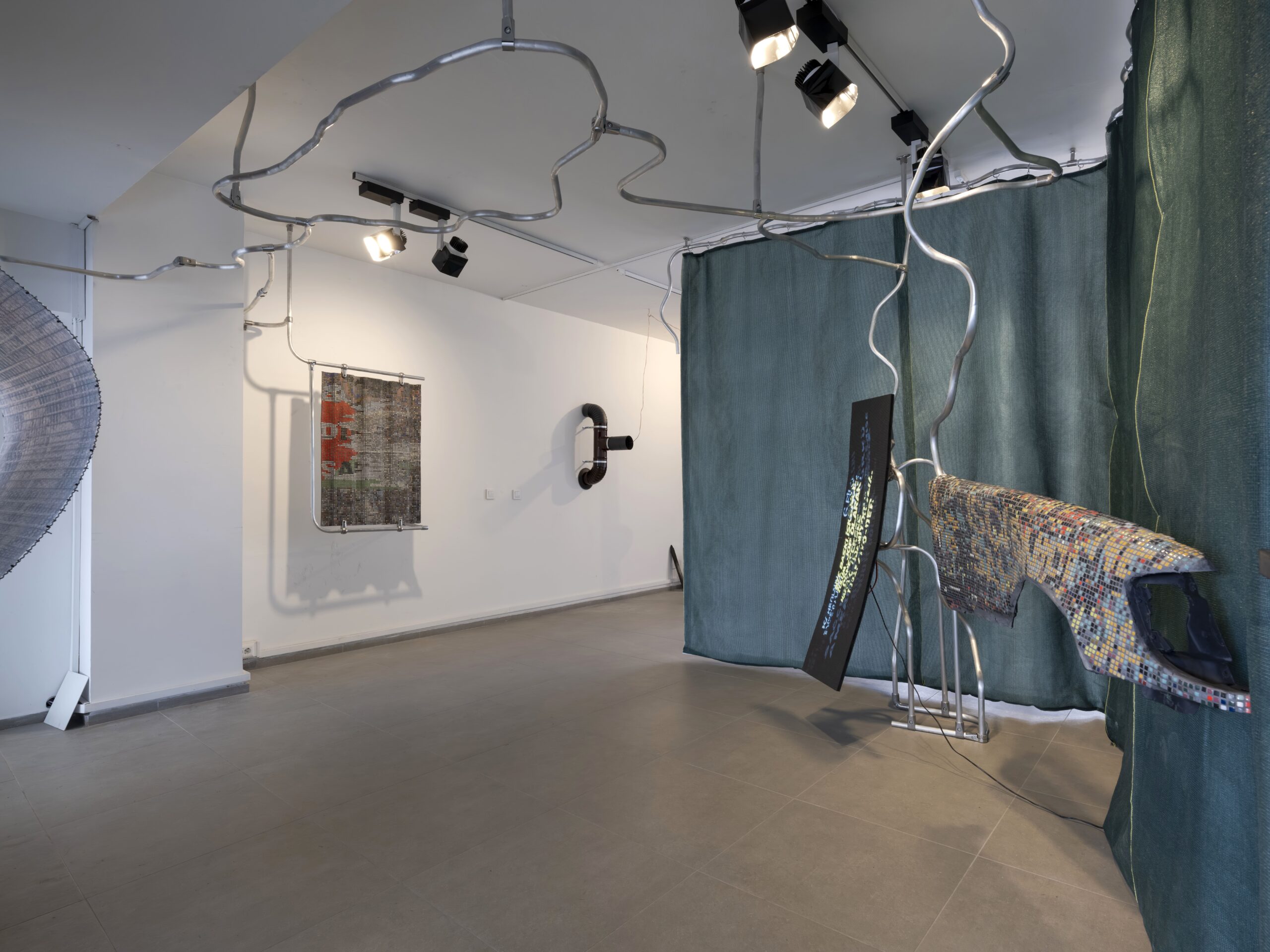
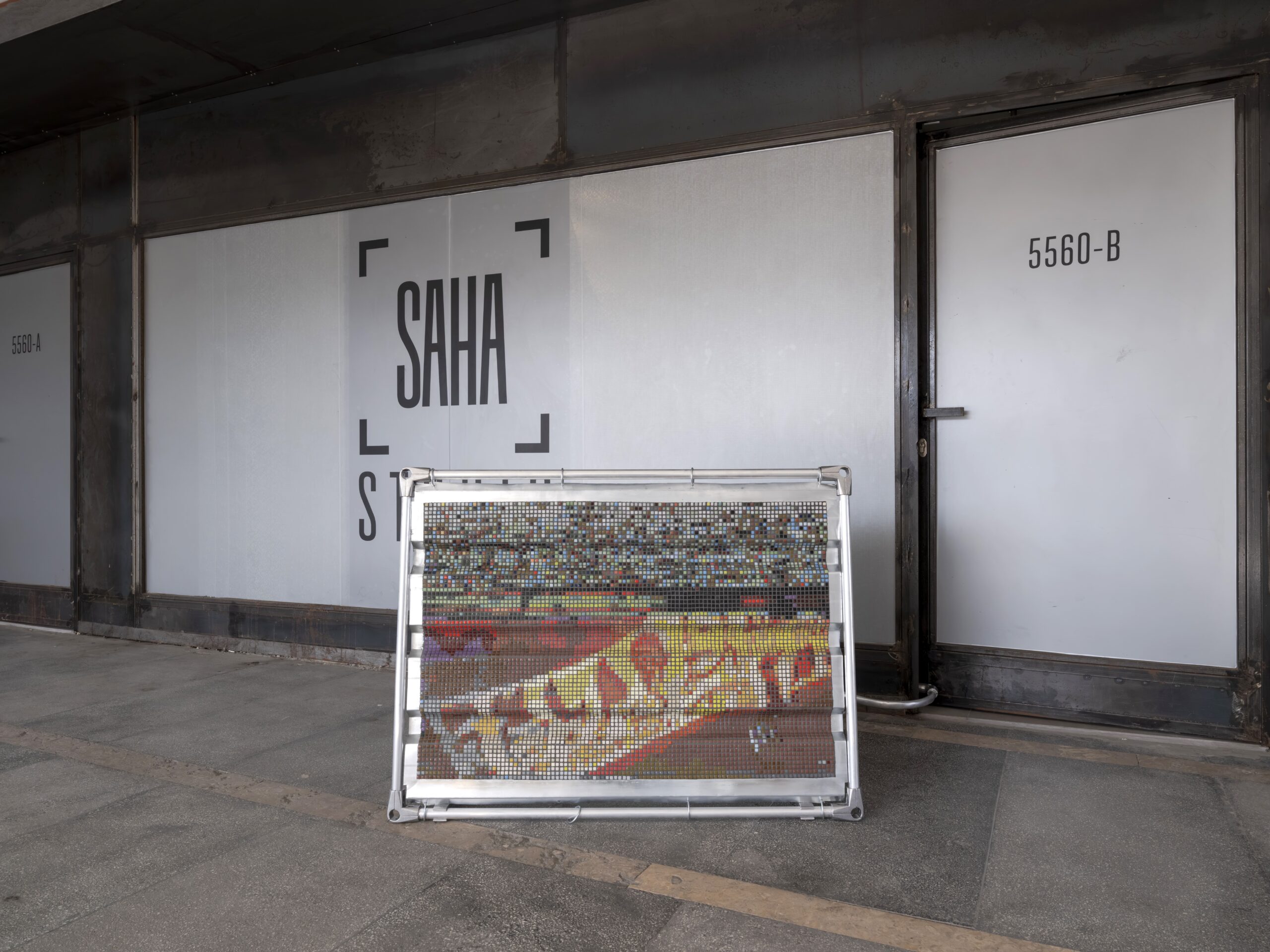
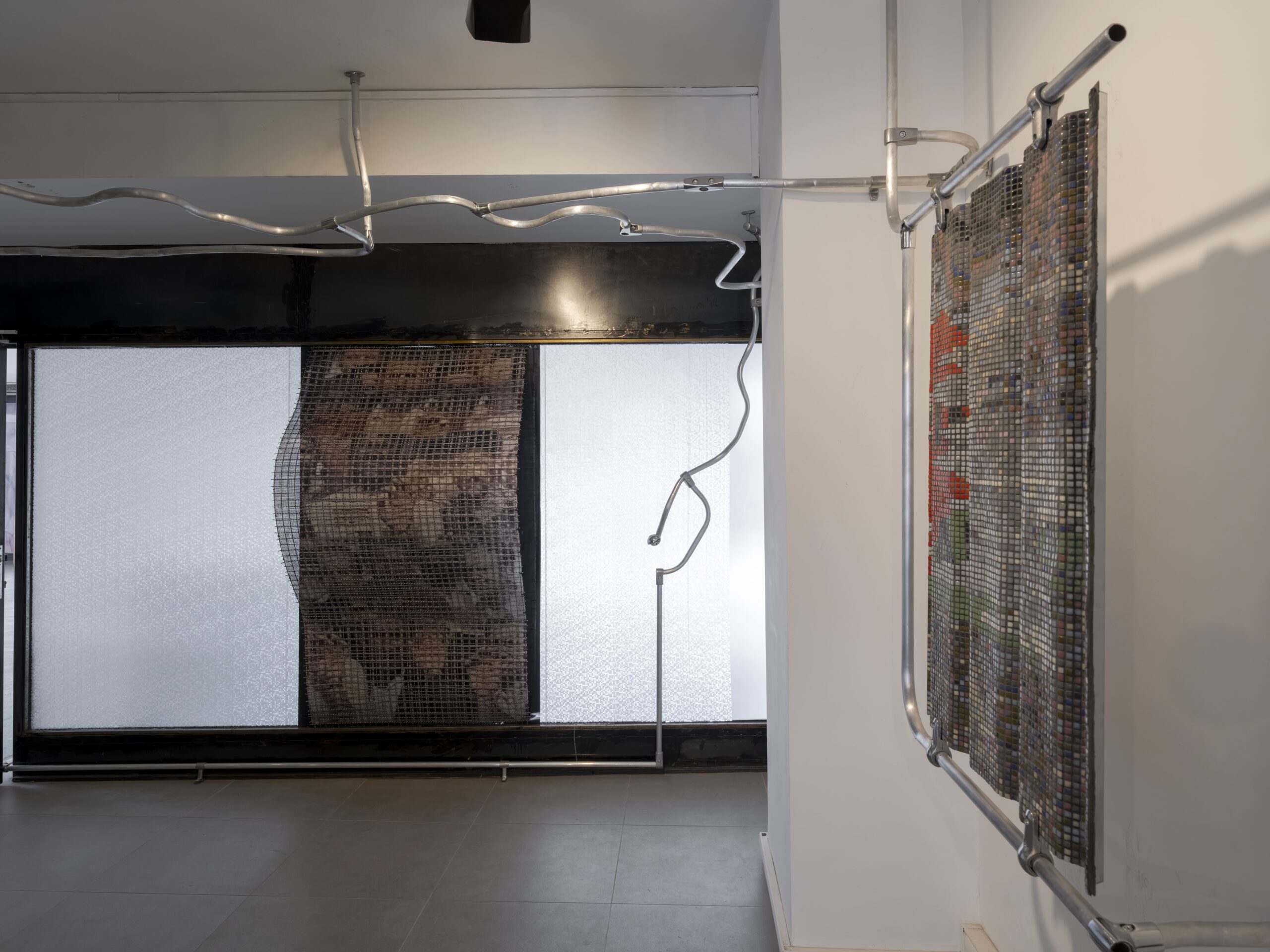
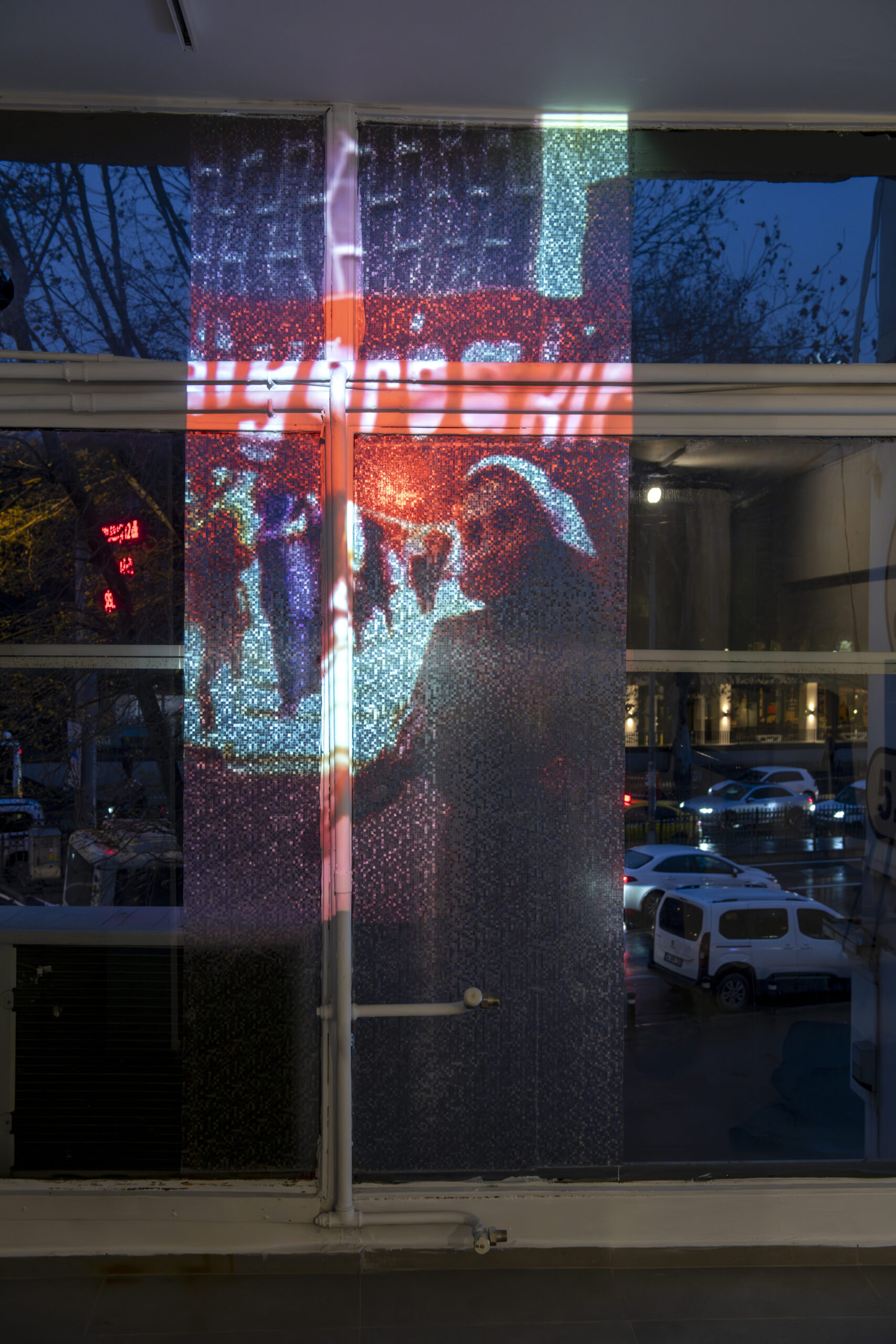
Installation: LED panel, mosaic surfaces, suspended metal construction, archival images, digital collages, tactile surfaces, mesh prints, video and photographic fragments compiled from protest archives
Echoes of Silent Hums invites a reconsideration of the concept of heritage by bringing historical and contemporary struggles into dialogue, confronting the viewer with traces where past and present intermingle. Bringing together surfaces that once occupied space in the public realm yet were destined to be erased, the installation overlays different forms of ownership such as national heritage, collective history, and moments of protest like a palimpsest. In doing so, it reveals that the erasure of a surface does not merely destroy it, but also exposes another layer beneath, making visible the fragile and intertwined nature of heritage.
The installation foregrounds the weight carried by silence and the traces left behind. Silence becomes a metaphor for the transformative power of collective action. The emotional residues of protests resonate with an intensity akin to the heavy silence of ancient cities. The marks left on streets and in public space become a new layer of heritage. Images gathered from public and personal archives in Istanbul are overlaid and abstracted as materials that persist despite low resolution digital environments. These materials are then transformed into LED panels, mosaics, and other inventories where repetition intersects with chance, pushing the limits of pixel-based modes of representation.
Surfaces are approached as layered carriers of time and memory. Each layer bears traces of encounters, erasures, and returns. During moments of protest, walls and cars become sites where anger directed at systemic injustices is inscribed. These surfaces, coded as damaged in the public sphere, come to symbolize the cost of social inequalities. Erased and rewritten slogans, worn textures, and accumulated layers render visible the tensions of multiple subjectivities and temporalities rather than a single narrative. Objects once fetishized by consumption and power return as ghostly memories. Shifting from function to testimony, these fragments form an anonymous visual archive and become heritage objects in their own right.
The spatial structure of the installation is shaped by a network of taut, interwoven metal lines referencing the routes of the 1961 Saraçhane rally. While tracing the trajectory of resistance like a three dimensional map, these lines also evoke the postures of bodies shaped by fatigue. Suspended fragments reflect the now still yet vibrating state of surfaces that were once in motion. In this context, silence appears not as an absence but as a dense, charged, and living atmosphere.
Echoes of Silent Hums does not aim to resolve, but to sharpen perception. It creates a space where ghosts still circulate, where time reverberates through its layers, and where the past continues to breathe within the present.